
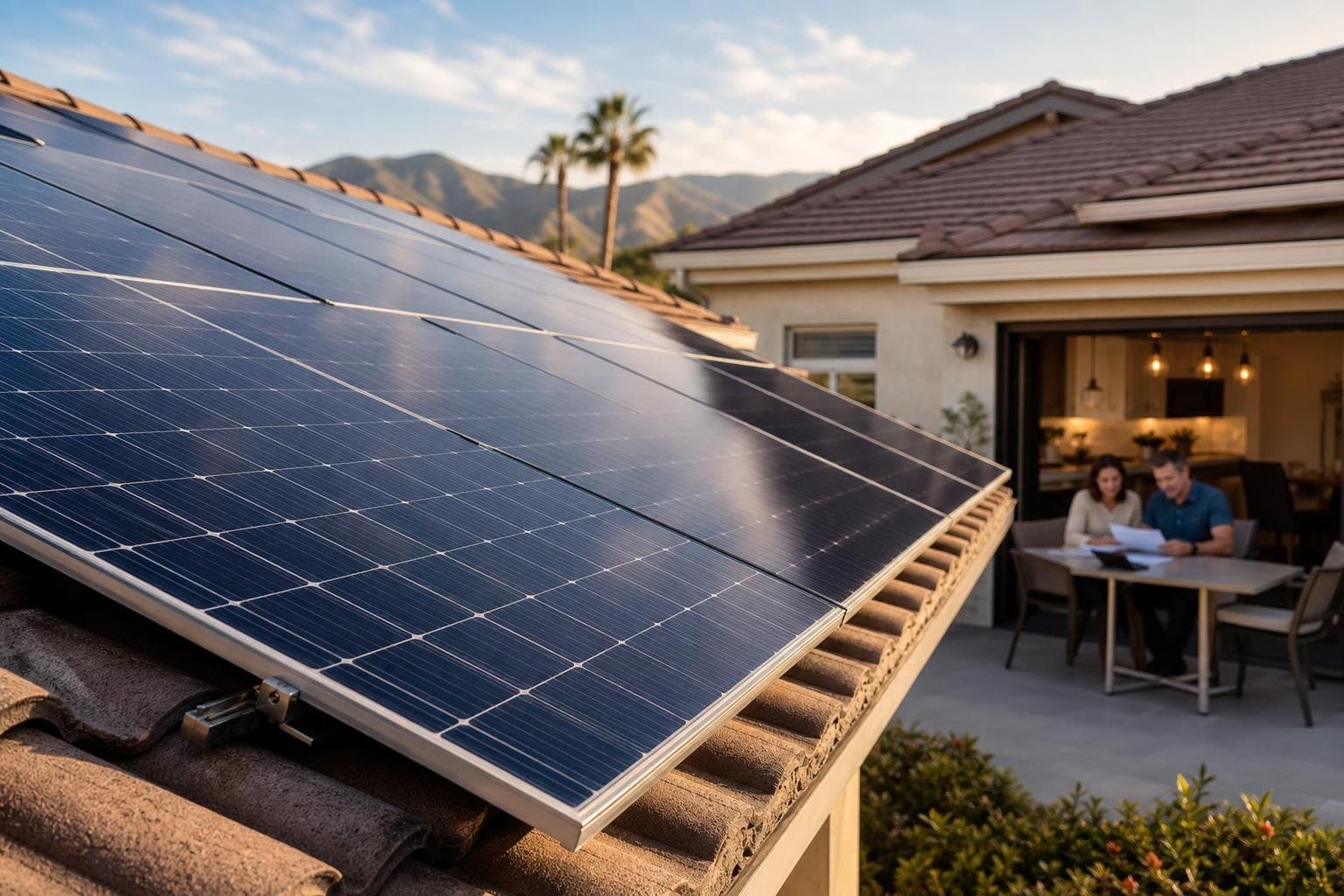
Solar Incentives in San Bernardino
San Bernardino homeowners often start with one question: what incentives are actually available, and how do they affect a real quote? This guide covers the main programs and the details worth confirming before you sign.
Current incentive rules can change, so final eligibility should always be verified with your installer, utility, and tax advisor.
Federal Credit: The Installation Deadline Has Passed
The federal Residential Clean Energy Credit under IRC §25D is not available for property placed in service after December 31, 2025. IRS credit guidance
P.L. 119-21 ended this credit. Completion of the original installation governs, not the contract or deposit date. For construction or reconstruction, the taxpayer’s original use of the structure governs. Paying before the deadline does not qualify an installation completed afterward. IRS deadline FAQs
Do not include this credit in a proposal for a new installation completed in 2026. Eligibility for a particular earlier installation remains unverified here; review your records with a qualified tax professional.
Utility Bill Credits and Net Billing Expectations
California’s regulator, the California Public Utilities Commission (CPUC), adopted the Net Billing Tariff (NBT) in decision D.22-12-056 for new interconnection applications since April 15, 2023. CPUC tariff guidance
These CPUC export-compensation rules apply in large investor-owned utility territories: Pacific Gas and Electric (PG&E), Southern California Edison (SCE), and San Diego Gas & Electric (SDG&E); customers of publicly-owned municipal utilities instead follow their own utility’s rules. Check the utility named on your electricity bill. CPUC scope
NBT values exports by their value to the grid, differently from legacy net energy metering (NEM); this materially affects savings modelling. Existing NEM customers retain terms for a transition period. The applicable tariff depends on the interconnection application date. CPUC NEM and NBT comparison
Ask each installer which tariff its savings model assumes, and locate your interconnection application date. Your home’s tariff treatment and remaining transition period remain unverified here; confirm them with your utility.
San Bernardino is expected to be Southern California Edison territory, but we were unable to confirm this from an SCE source during this review, so it remains unverified here. Check the utility named on your electricity bill.
Battery Storage and the Self-Generation Incentive Program
The CPUC Self-Generation Incentive Program (SGIP) offers incentives for eligible battery storage; it is not a general solar-panel subsidy. Its Residential Solar and Storage Equity budget can also support solar paired with storage for qualifying applicants. CPUC SGIP guidance
Your eligibility, the applicable budget, and available funding remain unverified here. Ask the program administrator to confirm these before including an incentive in your proposal.
Income-Qualified Solar: DAC-SASH
DAC-SASH (Disadvantaged Communities – Single-Family Solar Homes) serves income-qualified homeowners in eligible disadvantaged communities who are customers of the participating large investor-owned utilities. GRID Alternatives administers the program. Qualification depends on household income, location, and utility criteria; it must not be assumed. GRID Alternatives program requirements
Eligibility and availability for your household remain unverified here. Ask the administrator to check your address and income qualifications.
Active Solar Energy System Property-Tax Exclusion
California’s active solar energy system property-tax exclusion is a new construction exclusion, not a property-tax exemption. A qualifying installation does not increase the existing property assessment. The State Board of Equalization lists a scheduled statutory sunset of January 1, 2027. BOE exclusion guidance
How the exclusion applies to your property and installation date remains unverified here. Confirm the applicable timing and requirements with your county assessor.
Historical Programs and Proposal Checks
Some homeowners may also come across older program names such as the California Solar Initiative. That program is still relevant historically and for certain solar thermal references, but it is not the same as saying a broad new-customer rooftop rebate is available today. CPUC customer generation overview CPUC CSI history
Ask for the exact program name, current eligibility criteria, and who receives any proposed benefit. Keep uncertain incentives separate from confirmed project assumptions.
How Incentives Relate to Financing
Cash purchase
Ownership does not reopen the federal Residential Clean Energy Credit: property placed in service after December 31, 2025 is ineligible. Review any earlier installation with your tax advisor. IRS eligibility guidance
Solar loan
Confirm ownership, lender fees, repayment terms, and whether the proposal relies on an incentive that has not been verified.
Lease or power purchase agreement
Ask who owns the equipment and receives any eligible program benefit. Review maintenance duties, transfer terms, and the assumptions behind projected bill impact.
Battery and storage add-ons
Separate backup needs from bill-management assumptions. Ask how the battery is sized, what it can power, and which program requirements the installer has checked.
What Documents Homeowners Should Keep
Keep copies of your contract, change orders, invoices, proof of payment, equipment details, permit records, and any utility or program correspondence. Those documents are often important when reviewing tax credits or local program eligibility.
If a quote includes projected incentive value, ask how that estimate was calculated and what assumptions were made about ownership, tax appetite, and system completion timing.
Solar Incentives FAQ
Which tariff should my solar proposal assume?+
Ask your utility to confirm your interconnection application date and applicable tariff. The CPUC distinguishes legacy net energy metering from net billing for new applications. Keep the confirmed tariff with your proposal records. CPUC tariff guidance
Can a new installation claim the federal credit?+
No. The federal Residential Clean Energy Credit is unavailable for property placed in service after December 31, 2025. A prior contract or deposit does not extend the installation deadline. IRS deadline FAQs
Will solar eliminate my electric bill?+
Not necessarily. Your usage, tariff, imports, and system design affect the remaining bill. Ask the installer to identify every assumption.
What documents should I keep?+
Keep the signed contract, invoices, proof of payment, equipment details, permits, interconnection application date, utility approval, and program correspondence.
Ready to Compare Incentive-Aware Solar Quotes?
If you want to understand which incentives may apply and how different quotes handle them, request a free solar assessment for your home in San Bernardino.